
Advanced Cataract Surgery Technology
Over 15,000 Successful Cataract Procedures Performed
CATARACT SURGERY CENTER
Providing Ground Breaking Cataract Treatment Advancements to Idahoans

Cataract Treatment
A cataract occurs when the natural lens in your eye becomes cloudy, making it harder for light to enter your eye. They typically occur as we age, and often cause blurry vision, glare and halos.
Cataract eye surgery is a common outpatient procedure that removes the affected lens and replaces it with an artificial intraocular lens (IOL).
Traditionally, surgeons accomplished this using a surgical knife. Today, advanced laser technology has improved the procedure, allowing highly customizable treatment.
Over 4 million cataract procedures are performed in the U.S per year. Schedule a consult today and join the millions of patients getting back to their favorite activities.
Meet Your Cataract Specialists
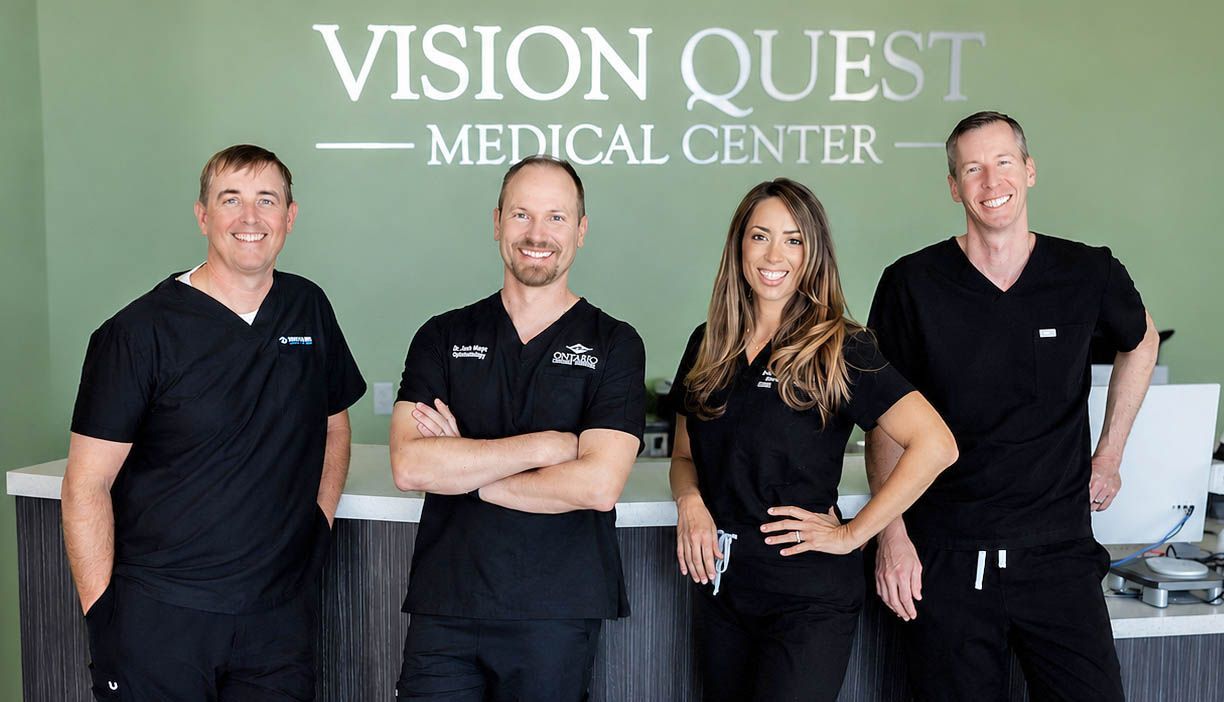
Our board-certified ophthalmologists have performed over 15,000 successful cataract surgeries, and served the Treasure Valley for nearly three decades. With advanced training from the leading institutions in the country, our surgeons proudly provide the latest cataract technology available to Boise, Meridian, and the surrounding areas.

Light Adjustable Lens
The new RxSight Light Adjustable Lens can be optimized after cataract surgery, making it the first lens to allow control over adjustment post surgery.
CATARACT ANSWERS CENTER
Get Answers to Frequently Asked Questions About Cataract Surgery at Vision Quest
What is a cataract, and what are the common symptoms?
A cataract occurs when the eye’s natural lens becomes cloudy over time, preventing light from focusing properly. Common symptoms include blurry or dim vision, increased sensitivity to light and glare, seeing halos around lights (especially when driving at night), faded colors, and frequent changes in your eyeglass prescription.
How experienced are the cataract surgeons at Vision Quest Medical Center?
Our board-certified ophthalmologists have served the Treasure Valley for nearly three decades and have successfully performed over 15,000 cataract surgeries. Our specialists are fellowship-trained at leading institutions across the country to deliver advanced surgical techniques and compassionate care.
What is the difference between traditional and laser-assisted cataract surgery?
Traditional cataract surgery uses precise manual incisions to remove the cloudy lens. Laser-assisted cataract surgery utilizes advanced computer-guided laser technology to make exact, bladeless incisions and gently soften the cataract before removal. Your surgeon will help you determine which approach is best suited for your eyes and visual goals.
What advanced Intraocular Lens (IOL) options does Vision Quest offer?
We offer leading-edge replacement lenses to fit your visual preferences and lifestyle:
- Light Adjustable Lens™ (LAL by RxSight): The first and only lens that allows your vision to be customized and adjusted using light treatments after your surgery for maximum precision.
- Trifocal IOLs: Premium multi-distance lenses designed to provide clear vision at near, intermediate, and far distances, significantly reducing or eliminating the need for reading glasses.
- Toric IOLs: Lenses specifically engineered to correct pre-existing astigmatism during cataract removal.
What is the Light Adjustable Lens (LAL), and how does post-surgery adjustment work?
The RxSight Light Adjustable Lens allows your doctor to fine-tune your prescription after your eye has fully healed from surgery. During brief in-office UV light treatment sessions, your visual outcome is customized based on your real-world visual feedback, ensuring optimal clarity tailored to your daily routine.
Can I treat my cataracts and glaucoma in a single surgery?
Yes. If you suffer from both cataracts and glaucoma or elevated eye pressure, Vision Quest Medical Center offers combined procedures. During cataract surgery, your surgeon can implant Micro-Invasive Glaucoma Surgery (MIGS) devices (such as iStent or iDose TR) to improve fluid drainage and reduce your reliance on daily eye drops.
Is cataract surgery painful, and what is the recovery time?
Cataract surgery is a quick, painless outpatient procedure. Local numbing drops and mild sedation ensure your comfort throughout. Most patients notice improved vision within 24 to 48 hours and can return to light everyday activities within a few days, with full recovery taking a few weeks.
Is cataract surgery covered by health insurance?
Standard cataract surgery and basic monochromatic IOLs are typically covered by Medicare and major private health insurance providers. Premium lens upgrades (such as Trifocal or Light Adjustable Lenses) and laser-assisted surgery may involve out-of-pocket costs. Our financial team provides clear pricing and flexible financing options to fit your budget.